

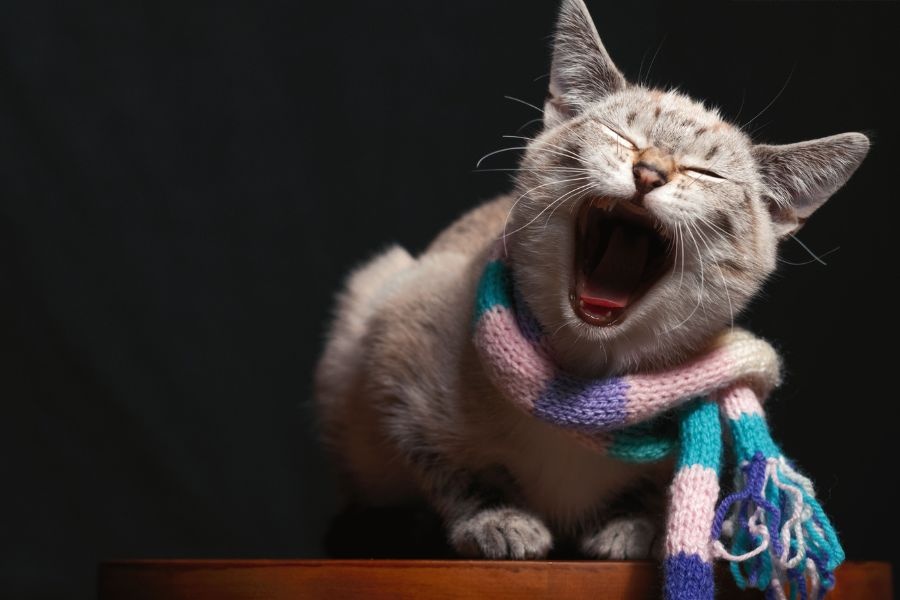
If you have ever watched your cat stretch out on the sofa and unleash a wide, dramatic yawn, you may have wondered what is actually going on. A cat yawn can be perfectly normal — but it can also be your pet’s way of communicating something important about how they feel. Understanding what drives feline yawning, when it is harmless, and when it may signal a need for oral care, diagnostic care, or senior pet attention is something every cat owner in Tarpon Springs should know. At Anclote Animal Hospital, we believe that paying attention to the small things your cat does every day can make a big difference in catching health issues early.
The Basics: Why Do Cats Yawn?
Like humans, cats yawn for a variety of reasons — and most of them are entirely benign. Yawning is a natural physiological response that helps increase oxygen intake, stretch the muscles of the jaw and face, and transition the body between different states of alertness. When your cat wakes up from a nap and immediately yawns, they are simply resetting their system for the next activity.
Yawning also plays a subtle role in feline communication. Cats use body language far more than vocalization to express how they feel, and a slow, relaxed yawn in your presence is often a sign of comfort and trust. It signals that your cat feels safe enough to let their guard down completely — which, in the world of cats, is actually a meaningful social gesture.
That said, not all yawning is created equal. The frequency, context, and appearance of your cat’s yawns can provide useful clues about their health. A cat that yawns occasionally after waking is one thing. A cat that yawns repeatedly, holds their mouth open, or shows signs of discomfort while yawning is telling a different story entirely.
What a Cat Yawn Can Reveal About Oral Health
One of the most important — and most overlooked — reasons to pay attention to your cat’s yawning is what it can reveal about their mouth. Every time your cat yawns wide, you get a rare, clear view of their teeth, gums, and tongue. That brief window is worth using.
Healthy cat gums should be pink and moist. Healthy teeth should be white or very slightly off-white, without visible buildup or discoloration. If you notice red, swollen, or pale gums, brownish tartar accumulation along the gumline, broken teeth, or an unusual odor during a yawn, these are signs that oral care deserves prompt attention.
Dental disease is one of the most common conditions diagnosed in cats, with studies suggesting that the majority of cats over three years of age show some degree of periodontal disease. Left untreated, dental disease does not stay in the mouth — bacteria from infected gums can travel through the bloodstream and affect the heart, kidneys, and liver. A cat yawn that gives you a clear look at concerning oral changes is an early warning worth acting on. Schedule a dental evaluation at Anclote Animal Hospital if anything looks or smells out of the ordinary during your cat’s next big stretch.
Yawning in Senior Cats: When Behavior Signals More
Senior cats — generally those aged ten years and older — yawn and display behavioral changes that deserve a closer look than the same behaviors in younger pets. As cats age, increased yawning or changes in how a cat holds their mouth can be associated with conditions like dental pain, thyroid dysfunction, hypertension, or cognitive decline.
Senior pet care involves paying attention to patterns, not just isolated incidents. If your older cat seems to yawn more frequently than before, appears to have difficulty closing their mouth fully, or is eating more slowly or dropping food while chewing, these behavioral cues may point to underlying pain or systemic illness. Cats are famously stoic — they rarely show obvious signs of discomfort until a condition has progressed significantly. Subtle behavioral changes are often the earliest indicators something is wrong.
In Tarpon Springs, where many households include beloved senior cats, regular wellness exams become increasingly important as pets age. Twice-yearly checkups for senior cats allow veterinarians to track changes over time, catch emerging conditions early, and adjust care plans before small issues become serious ones.
When Yawning Points to a Need for Diagnostic Care
While most cat yawns are harmless, there are specific patterns that should prompt a visit for diagnostic care rather than a wait-and-see approach. Knowing these signs can help you act quickly when it counts.
Excessive yawning paired with drooling, pawing at the mouth, or reluctance to eat may indicate oral pain, a foreign object lodged in the mouth, or an ulceration that requires immediate evaluation. Yawning accompanied by lethargy, weight loss, or changes in water consumption warrants bloodwork and a full diagnostic workup to rule out systemic conditions like kidney disease, hyperthyroidism, or diabetes.
Neurological causes are less common but worth noting. In rare cases, repetitive mouth movements or yawning-like behaviors can be associated with seizure activity or other neurological conditions. If your cat’s yawning looks unusual — more like a jaw tremor or repetitive gaping than a relaxed stretch — this is something to bring to your veterinarian’s attention right away.
Diagnostic care does not have to feel overwhelming. In most cases, a thorough physical exam combined with bloodwork and a dental assessment gives your veterinarian the full picture they need to identify what is driving unusual behavior and recommend the right course of action.
Conclusion: Your Cat’s Yawn Is Worth a Second Look
A cat yawn is easy to dismiss as ordinary — and most of the time, it is. But for observant pet owners, those wide-open moments are also small windows into your cat’s health. From the condition of their teeth and gums to the behavioral patterns of a senior pet, what your cat communicates through something as simple as a yawn is worth paying attention to.
At Anclote Animal Hospital in Tarpon Springs, our team takes a whole-pet approach to feline wellness — from routine oral care and senior pet checkups to comprehensive diagnostic care when something does not seem quite right. Schedule your cat’s wellness appointment today and let our team give your feline companion the attentive, personalized care they deserve.
At Anclote Animal Hospital in Tarpon Springs, we are passionate about helping cat owners understand their pets better and act early when health changes arise. Book your cat’s wellness visit today and give them the care that keeps them comfortable and healthy for years to come.
Frequently Asked Questions
Q1. Is it normal for cats to yawn frequently throughout the day?
Occasional yawning throughout the day is completely normal for cats. It is most common after waking from sleep or during relaxed, comfortable moments. If yawning becomes excessive, is paired with drooling or pawing at the mouth, or seems to cause your cat discomfort, it is worth scheduling a visit with your veterinarian.
Q2. What should I look for in my cat’s mouth when they yawn?
Use the moment to quickly check for red or swollen gums, tartar buildup along the gumline, broken or discolored teeth, and any unusual odors. Healthy gums should be pink and moist. If anything looks concerning, an oral care evaluation at Anclote Animal Hospital can help identify what is going on before it progresses.
Q3. How does dental disease connect to other health problems in cats?
Dental disease allows bacteria from infected gums to enter the bloodstream, where it can affect major organs including the heart, kidneys, and liver. This is why oral care is considered a core part of preventive health — not a cosmetic concern. Regular dental checkups and cleanings significantly reduce this systemic risk.
Q4. At what age should I start scheduling more frequent vet visits for my senior cat?
Most veterinarians recommend transitioning to twice-yearly wellness exams once your cat reaches around ten years of age. Senior pet care at this stage focuses on early detection of age-related conditions like kidney disease, hyperthyroidism, hypertension, and dental disease — all of which are far more manageable when caught early through routine diagnostic care.
Q5. When should a cat’s yawning be considered a veterinary emergency?
Seek prompt veterinary attention if your cat is yawning excessively alongside drooling, open-mouth breathing, gagging, significant lethargy, or an inability to close their mouth. These symptoms can indicate oral pain, a foreign object obstruction, or a systemic condition that requires immediate diagnostic care and treatment.
Related Articles

Fast, Friendly Help
For New, Sick & Injured Pets!