

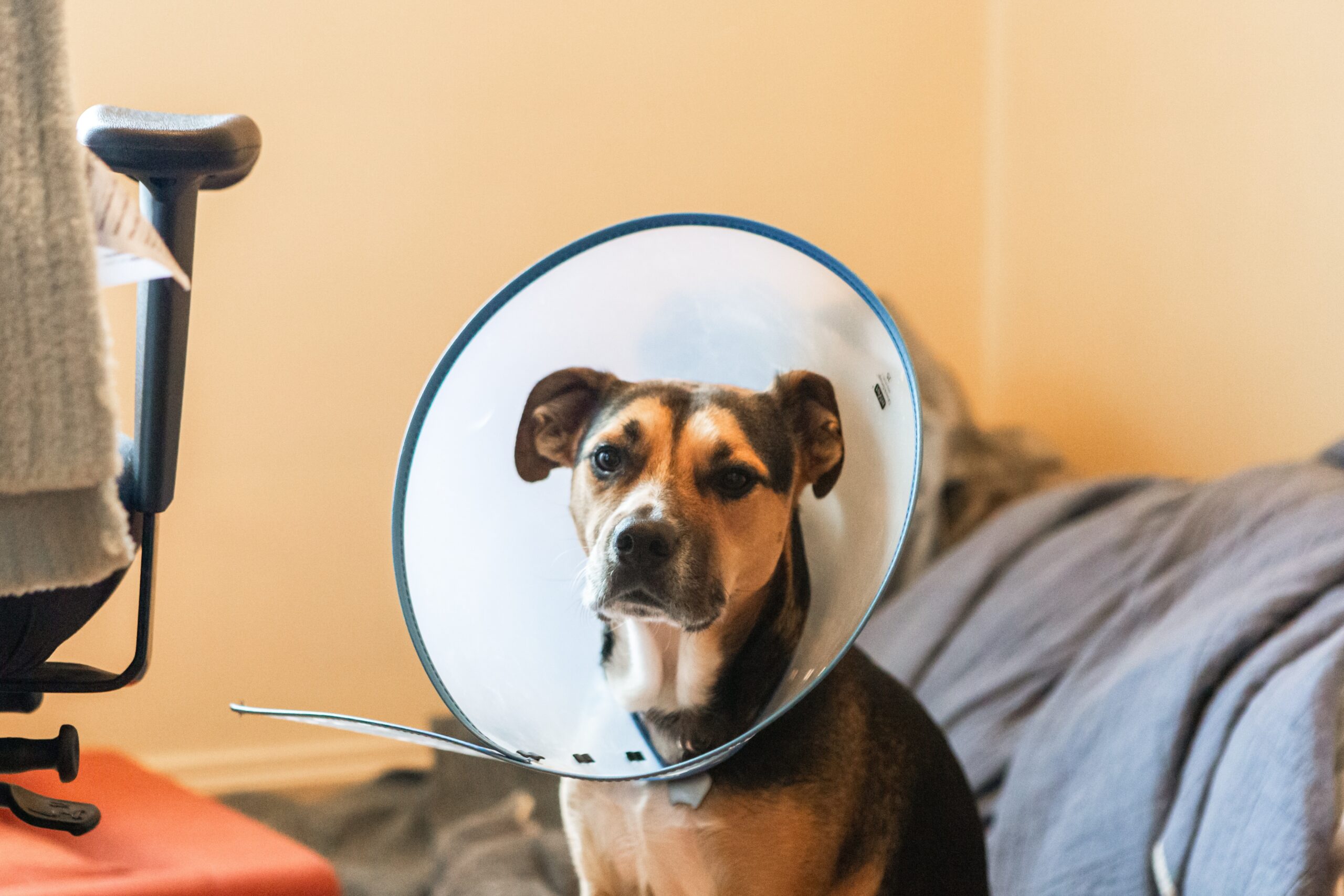
If your dog suddenly starts limping or refuses to put weight on a back leg, your first thought might be a minor sprain. But one common cause of hind leg lameness in dogs is a cruciate ligament rupture. This knee injury affects both small and large breeds, yet the way it develops, presents, and heals can look very different depending on your dog’s size.
Understanding these differences helps you make clear, timely decisions about care. Let’s break it down in plain language so you know what to watch for and what steps to take next.
What Is the Cruciate Ligament and Why Does It Matter?
Inside your dog’s knee joint (called the stifle) are two ligaments that cross each other. They stabilize the joint and keep the bones aligned during movement. When one tears, the knee becomes unstable. Pain, swelling, and limping follow quickly.
In dogs, this injury often develops over time rather than from a single accident. The ligament weakens gradually until it partially or fully tears. That’s why some dogs show subtle signs before a sudden limp appears.
While any dog can experience a cruciate ligament rupture, body weight and build play a major role in how the condition progresses.
Why Size Makes a Difference
Weight and Joint Stress
Large and giant breeds carry more body weight on their joints. Over time, this extra stress can weaken the ligament. Breeds like Labrador Retrievers, German Shepherds, Rottweilers, and Golden Retrievers are commonly affected.
Small dogs also develop this injury, but their lighter weight changes how the joint handles instability. The strain is lower, and sometimes symptoms appear less dramatic at first.
Anatomy and Angle of the Knee
Large dogs often have a steeper slope to the top of the shin bone. This increases forward movement inside the knee joint, placing extra tension on the ligament. In smaller breeds, joint angles may create less mechanical stress.
These structural differences help explain why larger dogs often need more advanced stabilization procedures, while smaller dogs may respond well to other approaches.
Early Warning Signs: Small vs. Large Dogs
Recognizing symptoms early protects long-term joint health.
Signs in Large Dogs
Large breed dogs usually show clear signs:
- Sudden, non-weight-bearing lameness
- Difficulty rising
- Stiffness after rest
- Swelling around the knee
- Muscle loss in the affected leg over time
Because of their size, instability becomes obvious quickly. Many large dogs hold the leg up completely.
Signs in Small Dogs
Small dogs may show milder or intermittent signs:
- Occasional limping
- Slight toe-touching
- Hesitation to jump on furniture
- Subtle stiffness
Owners sometimes mistake these signs for aging or mild soreness. Over weeks or months, the limp becomes more consistent.
If your dog shows any hind leg weakness, do not wait. Early diagnosis reduces long-term arthritis.
Diagnosis: What to Expect
Veterinarians diagnose this condition through a physical exam and imaging. During the exam, the knee is gently manipulated to check for instability. X-rays help assess joint swelling and bone changes.
The process is similar for all dogs, but sedation may be needed for larger dogs to ensure comfort and accuracy.
Clear imaging helps determine whether the tear is partial or complete and guides the treatment plan.
Treatment Differences Between Small and Large Dogs
Treatment depends on body size, activity level, and degree of instability.
Conservative Management
Some small dogs under 20–25 pounds may improve with:
- Strict rest
- Anti-inflammatory medication
- Joint supplements
- Physical therapy
- Weight control
Because they carry less weight, the joint can sometimes stabilize with scar tissue.
Large dogs rarely improve fully without surgery. Their weight prevents natural stabilization, and ongoing instability leads to arthritis.
Surgical Stabilization
For medium to large dogs, surgical repair is often the recommended option. Procedures such as TPLO (Tibial Plateau Leveling Osteotomy) or lateral suture techniques stabilize the knee mechanically.
While pet surgery may sound overwhelming, these procedures are common and carefully planned. The goal is to restore stability, reduce pain, and slow arthritis progression.
Small dogs may also require reliable pet surgery if instability persists or pain continues despite conservative care.
The choice of procedure varies based on weight, anatomy, and activity level.
Recovery: What Changes With Size?
Recovery timelines differ significantly.
Recovery in Large Dogs
- Strict activity restriction for 8–12 weeks
- Gradual leash walks only
- Controlled physical therapy
- Close monitoring for complications
Because of their size, large dogs must follow structured recovery carefully. Jumping too soon can compromise surgical repair.
Recovery in Small Dogs
Smaller dogs often regain function faster. Activity restriction is still essential, but muscle rebuilding may occur more quickly. Owners must prevent jumping from furniture during healing.
Regardless of size, rehabilitation improves long-term comfort and strength.
Long-Term Outlook
Both small and large dogs can live active, comfortable lives after treatment. Early care leads to better outcomes.
Large breeds have a higher chance of developing arthritis even after repair. Weight management becomes critical. Keeping your dog lean reduces stress on the joints.
Small dogs generally adapt well, though untreated cases may still lead to chronic pain.
In both groups, the opposite knee may be at risk. Studies show many dogs eventually injure the second ligament due to shared genetic and structural factors.
Prevention: What You Can Control
You cannot change genetics, but you can reduce risk:
- Maintain a healthy weight
- Avoid repetitive high-impact jumping
- Provide regular low-impact exercise
- Use joint-supportive nutrition
- Schedule routine checkups
Simple daily habits protect long-term joint health.
When to Seek Veterinary Care
Do not ignore a limp that lasts more than a few days. Waiting allows joint damage to progress.
If your dog refuses to bear weight, cries out in pain, or shows persistent stiffness, have the knee evaluated. Early intervention often reduces overall recovery time and cost.
Clear guidance from your veterinarian helps you understand whether rest, rehabilitation, or pet surgery is the best path forward.
Making an Informed Decision for Your Dog
A knee injury can feel overwhelming, but understanding the differences between small and large dogs gives you clarity. Size influences stress on the joint, treatment approach, and recovery expectations. What works for a 10-pound terrier may not be effective for a 70-pound retriever.
The most important step is early evaluation. Delayed care allows joint damage to worsen. With timely diagnosis and a structured plan, most dogs regain comfortable mobility.
If your dog is limping or showing signs of hind leg weakness, consider scheduling an exam and discussing options in detail. A thoughtful conversation helps you weigh conservative care against pet surgery and choose what aligns with your dog’s needs.
Every case deserves individual attention. If you have concerns about your dog’s knee health, schedule a consultation with us to review the best next steps and protect your dog’s long-term comfort.
FAQs
1. Can a small dog recover without surgery?
Some small dogs under 25 pounds improve with rest and medical management. Success depends on stability and consistent weight control.
2. How long does recovery take after surgery?
Most dogs need 8–12 weeks of restricted activity. Full muscle strength may take several months.
3. Is this injury painful?
Yes. The knee becomes unstable, causing inflammation and discomfort. Prompt care reduces pain.
4. Can exercise cause the tear?
Exercise alone rarely causes it. The ligament usually weakens over time. A sudden movement may trigger the final rupture.
5. Will my dog develop arthritis?
Arthritis often develops after a cruciate ligament rupture, but early treatment slows progression and improves comfort.
6. Can the other knee tear too?
Yes. Many dogs injure the opposite knee within one to two years. Weight management and conditioning help reduce strain.

Fast, Friendly Help
For New, Sick & Injured Pets!